 Stock
Lockheed Martin Soars to Top of the S&P 500: Record $292 Billion Backlog and an 850-Jet F-35 Deal Explained
2026-10-22
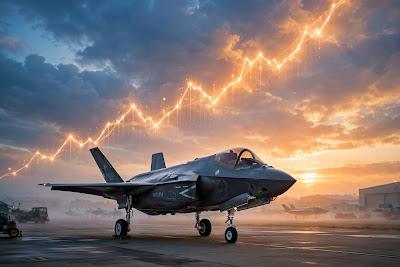
Lockheed Martin (NYSE: LMT) was the best-performing stock in the S&P 500 on Thursday, October 22, 2026, jumping about 6% after the defense contractor beat third-quarter estimates, raised its full-year guidance for the second straight quarter, and reported a record $292 billion backlog alongside a new 10-year framework covering 850 F-35 jets. It did all of that on a down day for the wider market — which is exactly why the move is getting so much attention.
What happened, in one paragraph
Lockheed Martin reported third-quarter earnings per share of $7.97, up about 15% from $6.95 a year earlier and well ahead of the $7.52 Wall Street expected. Sales rose 11% to $20.7 billion, topping forecasts of about $20.5 billion, and net earnings climbed 14% to about $1.85 billion. The company then raised its 2026 outlook and unveiled a framework agreement with the U.S. Department of Defense covering 850 F-35 jets over 10 years. Shares rose 6.1% in early trading to $585.62, according to Barron's, while the S&P 500 fell 0.7% and the Dow slipped 0.2% at the same time.
The key numbers
- Earnings per share: $7.97, vs. $7.52 expected and $6.95 a year ago
- Revenue: $20.7 billion, up 11% year over year, vs. about $20.5 billion expected
- Net earnings: About $1.85 billion, up 14%
- Backlog: A record $292 billion, up from $230 billion at the end of the second quarter
- Free cash flow: $3 billion in the quarter
- Missiles and Fire Control revenue: Up 24%, led by PAC-3 and THAAD missile defense production
- Aeronautics revenue: Up 13%, on higher F-35 production
- Stock move: Up about 6% in early trading — the top stock in the S&P 500, per Dow Jones Market Data via Barron's
Why it's blowing up
Three things landed at once. First, this was a clean beat: earnings, revenue and net income all came in above expectations, with every major segment growing. Second, the backlog number is hard to ignore. At $292 billion, Lockheed's order book jumped 27% in a single quarter and now represents roughly three and a half years of sales at the current run rate. About $52.5 billion of that backlog is tied to PAC-3 interceptor orders, reflecting sustained demand for missile defense. Third, management raised guidance again — the second consecutive quarter it has done so — which signals to investors that the strength is expected to continue, not fade.
The timing helped, too. Tech stocks were under pressure on Thursday after Tesla and Meta earnings failed to lift the market, and rising oil prices weighed on futures. A defense name delivering a beat, a raise and a record order book stood out sharply against that backdrop.
The 850-jet F-35 framework, explained
Separately from earnings, Lockheed and the Defense Department agreed to a 10-year F-35 framework covering 850 U.S. jets, plus international customer orders, while maintaining production at 156 jets per year. The framework also covers spare parts, modification kits and maintenance support, and Lockheed said it will invest at least $7 billion of its own capital to support the program. The F-35 matters because it is estimated to account for about 25% of Lockheed's total revenue. One important caveat: the framework is a prearranged commitment, not a finalized order — it still requires congressional approval and appropriations before it converts into a formal contract with locked pricing and schedules.
What the new guidance says
Lockheed now expects full-year 2026 revenue of $80 billion to $82 billion, up from $79.75 billion to $81.75 billion previously. Earnings per share guidance rose to $30.35 to $30.75, from $29.95 to $30.65 — a midpoint of about $30.55. Free cash flow guidance was also lifted, to $7.8 billion to $8.0 billion. Chairman, President and CEO Jim Taiclet credited "sustained financial momentum across our portfolio," noting the company delivered $3 billion of free cash flow in the quarter and raised its dividend for the 24th year in a row.
What's next
Investors will watch two things. The first is whether Congress approves the multiyear F-35 framework, which would trigger final negotiations on pricing and schedules. The second is conversion: whether Lockheed can turn that record $292 billion backlog into delivered revenue at the pace its raised guidance implies. The implied fourth-quarter earnings figure — about $8.20 per share, based on the new full-year range — sits slightly below the roughly $8.56 Wall Street currently projects, a small point of debate in otherwise upbeat analyst reactions. Jefferies called the quarter a "beat" driven by the missile business, and Vertical Research highlighted the backlog surge.
This post reports what happened and how markets reacted. It is not financial advice, and it is not a recommendation to buy, sell or hold any security.
FAQ
Why did Lockheed Martin stock rise on October 22, 2026?
Lockheed beat Q3 estimates (EPS $7.97 vs. $7.52 expected, revenue $20.7 billion), raised full-year guidance for the second straight quarter, reported a record $292 billion backlog, and unveiled a 10-year framework for 850 F-35 jets — sending shares up about 6% to lead the S&P 500.
What is Lockheed Martin's record backlog?
$292 billion at the end of Q3 2026, up 27% from $230 billion in the second quarter. About $52.5 billion is tied to PAC-3 interceptor orders.
What is Lockheed Martin's updated 2026 guidance?
Revenue of $80 billion to $82 billion and earnings per share of $30.35 to $30.75, both raised from the prior ranges, with free cash flow now expected at $7.8 billion to $8.0 billion.
Is the 850-jet F-35 deal final?
No. It is a 10-year framework agreement, not a finalized order. It still needs congressional approval and appropriations before becoming a formal contract.
Sources
- Barron's — Lockheed Martin Stock Soars to Top of the S&P 500 as the U.S. Orders More F-35 Jets
- Finbold — Lockheed Martin Q3 2026 results and raised outlook
- TradingView / Stocktwits — Lockheed Raises 2026 Guidance, Unveils F-35 Production Plan
- ABC Money — Lockheed Martin Lifts Outlook as Backlog Hits Record $292bn