 Stock
Volvo Cars Shares Crash Nearly 30% to a Record Low — Q3 Loss Five Times Worse Than Expected
2026-10-23
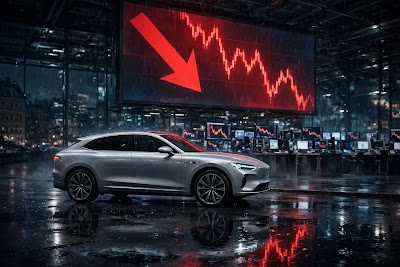
Volvo Cars shares plunged almost 30% in Stockholm on Friday, October 23, 2026, after the automaker reported a far bigger third-quarter loss than analysts expected and announced about 2,500 more job cuts. The stock fell to a record low as revenue dropped 22.6%, China sales collapsed, and the company offered no new full-year guidance.
The Direct Answer
What happened? Volvo Cars swung to an adjusted operating loss of SEK 3.7 billion (about $373 million) in Q3 2026, compared with a profit of SEK 5.8 billion a year earlier. Analysts tracked by Citi had expected a loss of only SEK 724 million — so the result was roughly five times worse than consensus.
How did the stock react? Shares fell almost 30% on the day, hitting a record low since the company's 2021 listing in Stockholm.
What Happened in the Quarter?
Revenue fell 22.6% year over year to SEK 66.9 billion, from SEK 86.4 billion a year earlier. The company reported a net loss of SEK 5.73 billion, compared with net income of SEK 4.51 billion in the same quarter last year, and earnings per share swung to a loss of SEK 1.63 from earnings of SEK 1.75.
On a reported basis, the operating loss was SEK 5.6 billion. Excluding joint ventures, associates and items affecting comparability, the adjusted operating loss was the SEK 3.7 billion figure cited by Reuters. Gross margin narrowed sharply — Reuters put it at 14.7%, down from 20.4% a year earlier — showing that the problem was not just selling fewer cars, but earning far less on each one sold.
Retail sales had already been flagged on October 2, when Volvo withdrew its full-year sales-volume and cash-flow guidance. Global deliveries fell about 11%, and Friday's earnings report showed why the company had warned investors in advance.
Why Is It Blowing Up?
Three markets told three different stories, and two of them were bad. In Greater China, retail sales fell 41% to about 19,900 vehicles, and revenue there dropped by almost half. Management said it will prioritise margins over market share in China rather than chase domestic rivals into aggressive price cuts.
In the United States, retail sales fell about 9% to roughly 23,800 vehicles, and U.S. revenue dropped by about a third. Tariffs, intense SUV competition and the end of federal EV incentives all weighed on demand, and fully electric sales in the U.S. fell sharply. Chief Executive Håkan Samuelsson said half the business was not contributing to profitability because of the U.S. and China, and called Europe the sole positive contributor.
Europe was the relative bright spot, with retail sales rising, even though revenue there still fell. There was also a production problem at home: the new EX60 electric SUV has attracted more than 50,000 orders in Europe, but its production ramp in Sweden has been slower than planned because of its new battery assembly process, so only about 1,300 were sold in the quarter.
Why Did Investors Sell So Hard?
The size of the miss mattered more than the loss itself. A SEK 724 million expected loss had already signalled a weak quarter — investors were braced for bad news. A SEK 3.7 billion adjusted loss told them the deterioration in China and the U.S. was deeper, and the cash position weaker, than priced in.
Detailed intraday reporting noted the shares fell as much as 32% to SEK 9.60, a record low, before trading down about 27% at SEK 10.29 against a previous close of SEK 14.12, on volume almost five times the daily average. The stock has now lost about two-thirds of its value this year. Free cash flow was also negative in the quarter, adding to concern about how long the turnaround will take to fund itself.
The Response: 2,500 More Jobs and SEK 5 Billion More in Cuts
Volvo said it will cut about 2,500 more jobs — roughly 6% of its workforce, including around 2,000 in Sweden — through ending consultant contracts, natural attrition and targeted exit packages. That comes on top of about 3,000 reductions announced earlier under its existing cost plan.
Alongside the jobs, the company added SEK 5 billion in further reductions to indirect spending and variable costs, on top of previously announced SEK 23 billion in cost cuts, with the new savings expected to be realised by the end of next year. Samuelsson told Reuters the latest cuts should be completed by mid-2027, and he did not rule out further measures if the turnaround falls short. Volvo expects about SEK 600 million in restructuring costs, to be booked in the fourth quarter.
"The third quarter of 2026 was very disappointing and reflects a year that has become far more challenging than originally anticipated. Our ongoing turnaround plan therefore needs a decisive reinforcement," Samuelsson said.
What's Next?
Volvo again gave no new outlook for the fourth quarter or the full year, after scrapping its volume and cash-flow guidance earlier this month. It kept its long-term ambition of an 8% operating margin, but without a timeframe — a target that looks distant after a negative margin this quarter.
The next tests are concrete: whether the EX60 production ramp reaches its planned pace, whether prioritising margins in China stops the revenue slide without losing too much volume, and whether building the XC60 in Charleston, South Carolina, from early 2027 helps offset U.S. tariff pressure. For now, Friday's record-low share price is the market's verdict that those answers are still to come. This article reports what happened and why markets reacted; it is not a recommendation to buy, sell or hold any security.
FAQ
Why did Volvo Cars shares fall nearly 30%?
Because its adjusted Q3 operating loss of SEK 3.7 billion was about five times the SEK 724 million loss analysts expected, and it announced 2,500 more job cuts with no new guidance.
How much did Volvo Cars lose in Q3 2026?
It reported a net loss of SEK 5.73 billion and an adjusted operating loss of SEK 3.7 billion, on revenue of SEK 66.9 billion, down 22.6% year over year.
How many jobs is Volvo Cars cutting?
About 2,500 more jobs, including around 2,000 in Sweden — on top of roughly 3,000 reductions announced earlier.
What hurt Volvo Cars most in the quarter?
A 41% fall in China retail sales, weaker U.S. demand hit by tariffs and the end of EV incentives, and a slow production ramp for the new EX60 electric SUV.
Sources
- Reuters — Volvo Cars swings to third-quarter loss, plans job cuts
- Global Banking & Finance Review (Reuters) — Volvo Cars shares slump on big loss, 2,500 more jobs to go
- Seeking Alpha — Volvo Cars swings to Q3 loss as revenue falls 22.6%
- Electric Vehicles — Volvo Cars shares crash 30% to record low on Q3 loss and more job cuts